Latest Entries

Valparaíso: The Jewel of the Pacific - Triumph, Tragedy, and Resilience

Clinging precariously to steep hills overlooking the Pacific Ocean, Valparaíso stands as Chile's most visually captivating and culturally vibrant city—a UNESCO World Heritage Site where brightly painted houses cascade down hillsides like a waterfall of color, where historic funiculars defy gravity to connect the lower port with hillside neighborhoods, and where street art transforms crumbling walls into open-air galleries. Located northwest of Santiago on Chile's central coast, "Valpo" served as South America's most important Pacific port during the late 19th and early 20th centuries.

The Maya Forest and Marine Corridors: Connecting Mountains to Sea in Belize

Extending from southwestern Belize's Maya Mountains eastward to the Caribbean Sea, the Maya Mountain Marine Corridor represents one of the world's most innovative conservation approaches—integrating terrestrial and marine ecosystem management to create a continuous protected landscape from mountain peaks to coral reefs. This visionary corridor bridges the gap between highland forests and coastal waters, where species rely on both terrestrial and marine habitats during their life cycles.

The Maya Mountains: Ancient Peaks at the Heart of Belize's Wilderness

Rising dramatically from the coastal plains and limestone lowlands of west-central Belize and extending into eastern Guatemala, the Maya Mountains stand as both the geological backbone and ecological heart of the nation. This ancient mountain range represents one of Central America's oldest geological features and plays a pivotal role in shaping the region's landscape, biodiversity, and cultural heritage. The Maya Mountains form the centerpiece of Belize's conservation efforts, including the critical Maya Mountain Marine Corridor that connects these highlands to Caribbean coastal waters.

Cape Froward National Park: Protecting the Edge of the World

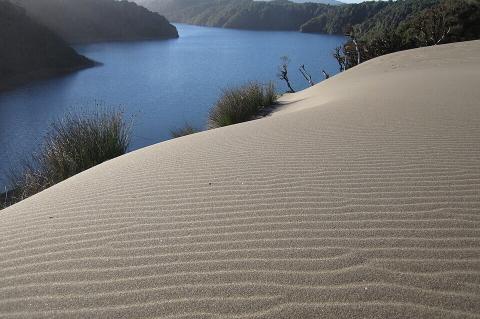
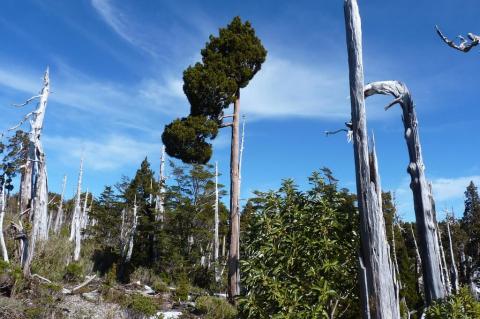
At the southernmost point of the South American continent, Chile is establishing Cape Froward National Park, one of the nation's most ambitious conservation initiatives in decades. Located on the Brunswick Peninsula, southwest of Punta Arenas, this protected area encompasses pristine wilderness facing the historic Strait of Magellan. The park represents a convergence of extraordinary natural features: forests, peatlands, and dramatic coasts where Pacific and Atlantic waters meet at the continent's terminus.

Patagonia: Nature's Last Frontier at the End of the World

Argentina and Chile share Patagonia, a vast and enigmatic region at the southern tip of South America. It is renowned for its stunning landscapes, rich biodiversity, and cultural heritage. This expansive region, often referred to as one of the world's last remaining "Edens," captivates with its mix of arid plains, towering mountains, sprawling glaciers, and dense forests. Patagonia's geographical, climatic, economic, and cultural aspects reveal a region of immense natural beauty and significance.

The Salí River: Lifeline and Challenge of Northwestern Argentina

Flowing through northwestern Argentina, the Salí River serves as the region's key watercourse. Originating from precipitation in the Calchaquíes mountains and fed by streams from Sierra del Aconquija, it flows north to south through Tucumán, then southeast through Santiago del Estero, ending in the Mar Chiquita lagoon in Córdoba. The Salí-Dulce basin spans five provinces and supports nearly 2.5 million people for drinking, irrigation, industry, and hydroelectricity. However, industrial pollution, agricultural runoff, and urban waste have transformed it into one of Argentina's most contaminated river systems.

Cajón del Maipo: Santiago's Andean Playground and Gateway to San José Volcano

Just southeast of Santiago, the Cajón del Maipo—a dramatic Andean canyon carved by the upper Maipo River—offers one of Chile's most accessible and spectacular mountain experiences. This narrow valley, surrounded by towering peaks, including the imposing San José Volcano, encompasses the upper Maipo River basin, where the river has carved itself between steep canyon walls descending from the High Andes. The region extends to the Argentine border, where it is surrounded by some of the highest peaks in the area, including several active volcanoes

The Maipo River: Lifeline of Central Chile

The Maipo River flows from the western slopes of the Andes to the Pacific Ocean, providing approximately 80% of Santiago's freshwater supply for seven million people. The river's basin contains more than 800 glaciers that serve as critical water storage during dry summer months. However, climate change has driven dramatic glacier retreat. This vital river system faces mounting pressures from prolonged drought, urban expansion, and agricultural demands, threatening water security for millions while supporting agriculture and industry.

Maipo Valley: Where Chilean Wine Excellence Meets Andean Majesty

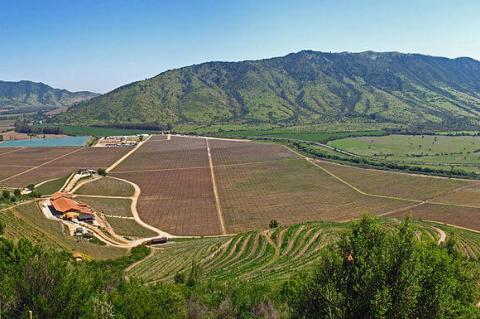
Stretching from Santiago's southern suburbs to the snow-capped peaks of the Andes, the Maipo Valley stands as Chile's most historic and prestigious wine-producing region. Often called the "Bordeaux of South America," this fertile valley produces some of South America's finest wines. The region represents the birthplace of Chilean wine culture, where Spanish colonists planted the nation's first vines in the 1540s and where 19th-century entrepreneurs established grand estates that transformed Chilean winemaking from rustic Colonial production to world-class viticulture.

La Moneda Palace: A Symbol of Chilean History, Resilience, and Democracy

La Moneda Palace, located in downtown Santiago, serves as Chile's presidential seat and most iconic political landmark. Originally constructed as a colonial mint house, this neoclassical masterpiece was transformed into the government headquarters in 1845. The palace witnessed Chile's darkest moment during the 1973 military coup, when aerial bombardment severely damaged the building during General Pinochet's overthrow of President Salvador Allende. Carefully restored and painted white, La Moneda today symbolizes Chilean resilience and democracy.