
Monte Verde: Rewriting the Story of America's First People
On the banks of Chinchihuapi Creek in southern Chile lies one of the most significant archaeological sites in the Americas. Monte Verde, a Paleolithic settlement preserved beneath a peat bog, fundamentally challenged long-held beliefs about when and how humans first reached the New World.
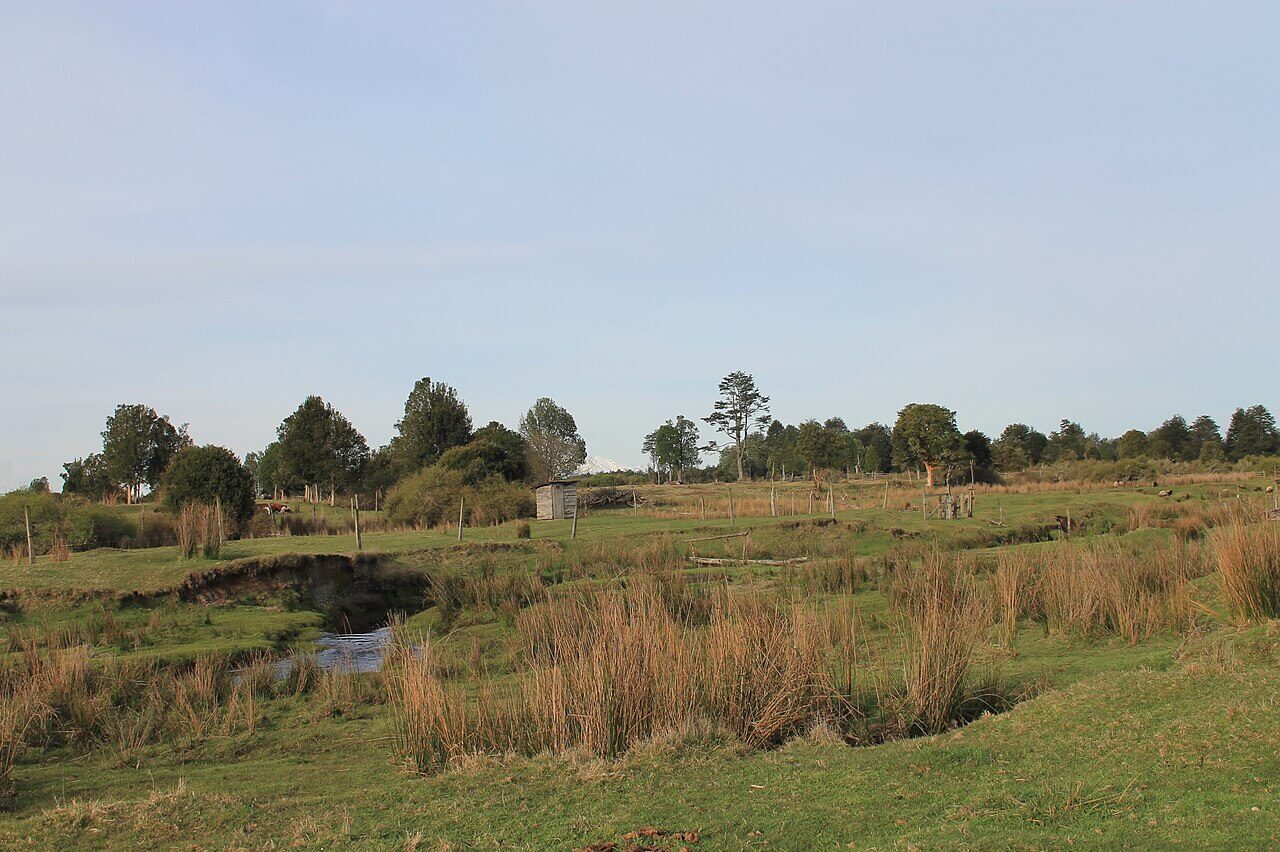
Chile's Monte Verde: Where the Peopling of the Americas Began
On the banks of Chinchihuapi Creek in southern Chile, approximately 800 kilometers (500 miles) south of Santiago, lies one of the most significant archaeological sites in the Americas. Monte Verde, a Paleolithic settlement preserved beneath a peat bog for more than 14,000 years, fundamentally challenged long-held beliefs about when and how humans first reached the New World. Discovered in 1975 and excavated over decades by archaeologist Tom Dillehay and his team, this remarkably well-preserved site revealed wooden structures, medicinal plants, seaweed from the Pacific coast, and the remains of extinct animals—evidence that humans lived at the southern tip of South America at least 1,000 years before the previously accepted date for human arrival in the Americas. The site's exceptional preservation, meticulous excavation, and irrefutable dating ultimately overturned the "Clovis First" hypothesis that had dominated American archaeology for most of the 20th century, forcing a complete reassessment of how and when the Americas were peopled.
Discovery and Location
Monte Verde is in Chile's Llanquihue Province, in the Los Lagos Region, near the city of Puerto Montt, in the temperate rainforests of northwestern Patagonia. The site lies between the Coastal and Andean mountain ranges at approximately 400 feet (120 meters) above sea level, positioned about 60 kilometers (37 miles) from the Pacific Ocean as measured from the Late Pleistocene coastline. Today, the nearest coast is approximately 80 kilometers (50 miles) west, though rising sea levels since the last Ice Age have altered the distance.
The discovery occurred almost by chance in late 1975 when a veterinary student visited the area where severe erosion from logging operations was occurring along Chinchihuapi Creek. Local farmers showed him a strange "cow bone" they had found exposed in the eroded creek bank. The bone proved to be from Notiomastodon, a gomphothere—an elephant-like creature that went extinct at the end of the Pleistocene. Recognizing the potential significance, Tom Dillehay, then a young American anthropologist teaching at Universidad Austral de Chile, began excavating Monte Verde in 1977.
The site's exceptional preservation resulted from a fortuitous combination of circumstances. Shortly after the original occupation, Chinchihuapi Creek's waters rose, and a peat-filled bog formed over the settlement. This waterlogged, anaerobic environment inhibited bacterial decay, preserving organic materials—wood, hide, plant remains, even twisted grass rope—that typically decompose within decades or centuries. For archaeologists, the preservation was extraordinary, offering a rare window into Paleolithic life at an open-air site.
Monte Verde II: The Accepted Occupation
The main occupation layer, designated Monte Verde II (MV-II), dates to approximately 14,550-14,500 calibrated years before present (cal BP), though some radiocarbon dates suggest occupation may have begun slightly earlier. This places human presence at Monte Verde more than 1,000 years before the oldest confirmed Clovis culture sites in North America, which date to approximately 13,000-13,500 years ago.
The Monte Verde II settlement consisted of several distinct areas. The primary feature was a long, rectangular communal structure measuring approximately 18 meters (60 feet) in length, with a foundation of wooden posts and planks. This tent-like building appears to have been divided into approximately twelve smaller rooms or compartments, each containing evidence of individual or family occupation: clay-lined hearths, food remains, tools, and in some cases, medicinal plants.
The structure's foundation consisted of a log framework covered with animal hides held in place by stakes and ropes made from twisted grass or reeds. Archaeologists found the wooden stakes still embedded in the ground exactly where ancient inhabitants had driven them more than 14,000 years ago. The subdivision of the large structure into smaller living areas suggests a community of approximately 20-30 people who maintained individual family spaces within a shared dwelling—a social organization pattern documented in many later hunter-gatherer societies.
Approximately 30 meters (100 feet) from the main residence stood a wishbone-shaped or U-shaped structure with an eastern-facing entrance. This building's function appears to have been different from that of the residential structure. Archaeological evidence suggests it served as a workspace for processing game, preparing tools, and possibly conducting ritual activities. The presence of hardened gravel and sand foundations indicates more substantial construction than typical temporary shelters.
Throughout the site, excavators discovered two large communal hearths and numerous smaller fire features. The hearths contained charcoal, burned clay, and food remains, while nearby areas yielded wooden planks used for food processing, stone tools for scraping and cutting, and the burned tip of a wooden lance.
Evidence of Subsistence and Lifeways
Monte Verde's waterlogged preservation revealed details about Paleolithic subsistence strategies rarely documented in American archaeology. The inhabitants hunted large game, including Notiomastodon (gomphotheres), extinct camelids similar to modern guanacos and llamas, and smaller animals. However, plant gathering appears to have been equally, if not more, important than hunting.
Botanical remains recovered from the site include wild potatoes, edible seeds, fruits, nuts, berries, mushrooms, and various tubers and rhizomes. The diversity of plant species—representing marshes, forests, and coastal environments—suggests the Monte Verdeans exploited multiple ecological zones. By gathering plants with different growing seasons, they could obtain food year-round, enabling permanent or semi-permanent occupation rather than seasonal camps.
Particularly remarkable was the discovery of nine species of seaweed and marine algae recovered from hearths and living areas. Some species came from the Pacific coast approximately 60 kilometers (37 miles) away, while others originated from marine bays about 16 kilometers (10 miles) distant. The seaweed was directly radiocarbon-dated to 14,220-13,980 years ago, confirming its contemporaneity with the occupation.
The seaweed served multiple purposes. Some species were edible, providing nutrients including iodine and salt. Others had medicinal properties—several species found at Monte Verde are still used in traditional Chilean medicine to treat ailments from kidney problems to wounds. The presence of wads of masticated (chewed) seaweed suggests preparation for medicinal application. One concentration of medicinal plants found near the U-shaped structure has led archaeologists to interpret that building as possibly serving shamanistic or healing functions.
The abundance and diversity of coastal resources—seaweed, flat beach pebbles for tools, water plants from brackish estuaries, and bitumen (natural asphalt)—suggest very frequent contact with the coast. Dillehay proposes that the Monte Verdeans practiced transhumance, moving seasonally between coastal and inland areas to exploit different resources. This pattern of coastal-interior movement may have been typical of early American peoples and could help explain the relatively slow southward migration through the Americas.
The Clovis First Controversy
When Dillehay first reported radiocarbon dates exceeding 14,000 years BP in 1979, the announcement sparked intense controversy. For most of the 20th century, American archaeology had operated under the "Clovis First" hypothesis. This model held that human colonization of the Americas began approximately 13,000 years ago, when big-game hunters—the Clovis culture, named for distinctive spear points first found near Clovis, New Mexico—crossed from Siberia to Alaska via the Bering land bridge, which was exposed during the last Ice Age.
The Clovis First model proposed a rapid "blitzkrieg" migration southward through an ice-free corridor between glaciers in western Canada, with hunters following herds of mammoths, mastodons, and other megafauna. The earliest reliably dated Clovis sites were around 13,000 years old, and no convincingly older sites had been accepted by mainstream archaeology.
Monte Verde's dates—more than 1,000 years older than Clovis and located at the opposite end of the Americas in southern Chile—were difficult to reconcile with this model. If people reached southern Chile by 14,500 years ago, they must have entered the Americas considerably earlier. Many archaeologists dismissed the Monte Verde findings, questioning the excavation methods, dating, and interpretations of features.
The controversy persisted through the 1980s and early 1990s. Finally, in 1997, a delegation of prominent archaeologists—many of them Clovis First proponents—visited Monte Verde to inspect the site and review the evidence. After examining the stratigraphy, artifacts, and dating methods, the panel unanimously concluded that Monte Verde II represented a legitimate pre-Clovis occupation dated to at least 14,500 years ago.
This consensus marked a watershed moment in American archaeology. Clovis was not first. The acceptance of Monte Verde opened the floodgates for reconsideration of other potential pre-Clovis sites and fundamentally changed how archaeologists thought about the peopling of the Americas.
Monte Verde I: The Controversial Earlier Occupation
Below the Monte Verde II layer lies a much older, far more controversial stratum, designated Monte Verde I (MV-I). In 1988, Dillehay reported finding three clay-lined burned areas and at least six stones that appeared to be shaped into tools in deposits dated to approximately 33,000 years BP (later revised to approximately 18,500 BP using more refined dating methods).
The Monte Verde I evidence was sparse compared to the rich assemblage from Monte Verde II—just a few possible stone tools, burned areas, and modified stones distributed across a large area. Many archaeologists considered the evidence too limited to constitute convincing proof of human presence. Stone flakes could be naturally produced through geological processes, and burned areas could result from natural fires. The scientific community generally did not accept Monte Verde I as evidence of human occupation.
However, subsequent research between 2013 and 2019 added to the evidence for Monte Verde I. Dillehay's team excavated 80 test pits and probes around the Monte Verde area, identifying 12 discrete locations with signs of campfires (charcoal, ash, burned clay), stone tools, and burned animal bones. Optically stimulated luminescence (OSL) and radiocarbon dating placed these features at 14,500-18,500 years ago.
This newer evidence suggests that humans may have sporadically visited or camped in the Monte Verde area over a 4,000-year period, with the Monte Verde II settlement representing a later, more intensive occupation. However, the Monte Verde I evidence remains controversial, and many archaeologists await further discoveries before accepting human presence in South America as early as 18,500 years ago.
Implications for Coastal Migration
Monte Verde's location and contents support the coastal migration theory for the peopling of the Americas. This hypothesis proposes that early Americans migrated south along the Pacific coast rather than through an interior ice-free corridor. Coastal routes would have provided rich marine resources—fish, shellfish, seaweed, and seabirds—that could have sustained migrating populations. Boats or rafts would have allowed relatively rapid movement along coastlines, with groups stopping to exploit local resources before continuing southward.
The abundance of seaweed and coastal materials at Monte Verde, despite its inland location, demonstrates intimate knowledge of and regular contact with coastal environments. The pattern of moving between coastal and inland areas to exploit different ecological zones—documented at Monte Verde and other early South American sites—suggests a sophisticated subsistence strategy well-adapted to Pacific South America's diverse environments.
Unfortunately, testing coastal migration theories remains challenging because sea levels have risen approximately 120 meters (394 feet) since the Last Glacial Maximum. Most Ice Age coastlines now lie underwater on the continental shelf, and any archaeological sites that existed on those ancient shorelines are submerged and difficult, if not impossible, to investigate.
Preservation and Research
Monte Verde has been designated as part of Chile's national heritage and is on Chile's Tentative List for UNESCO World Heritage inscription. The site faces ongoing preservation challenges. The peat deposits that preserved the site for millennia are threatened by erosion, climate change, and human activity. Water level management in Chinchihuapi Creek is crucial to maintaining the waterlogged conditions that prevent the decomposition of organic material.
Research continues at and around Monte Verde. Ongoing studies employ increasingly sophisticated techniques—ancient DNA analysis, phytolith analysis, lipid residue analysis, and high-resolution dating—to extract additional information from the site and its artifacts. Each new analytical technique offers potential insights into the lives of the Monte Verdeans and the environments they inhabited.
A Revolutionary Site
Monte Verde transformed our understanding of American prehistory. Before Monte Verde's acceptance, most archaeologists envisioned the peopling of the Americas as a relatively recent and rapid event—Clovis hunters crossing Beringia around 13,500 years ago and spreading through the hemisphere within a few centuries. Monte Verde demonstrated that humans reached southern South America at least 1,000 years earlier than this model allowed, requiring a fundamental rethinking of migration routes, timing, and subsistence strategies.
Today, archaeologists recognize that American prehistory is far more complex and ancient than the Clovis First model suggested. Multiple migrations, diverse cultural traditions, and sophisticated adaptations to varied environments characterized the peopling of the Americas. Monte Verde played a crucial role in this conceptual revolution—not because it provided all the answers, but because it forced archaeologists to ask better questions and reconsider long-held assumptions.
The site stands as a reminder that sometimes the most important discoveries challenge our fundamental understanding, and that scientific progress requires a willingness to revise cherished theories when confronted with compelling evidence. The Monte Verdeans who built their shelters on the banks of Chinchihuapi Creek 14,500 years ago could never have imagined that their home would one day reshape how we understand human history in the Americas.