Latest Entries

The Maipo River: Lifeline of Central Chile

The Maipo River flows from the western slopes of the Andes to the Pacific Ocean, providing approximately 80% of Santiago's freshwater supply for seven million people. The river's basin contains more than 800 glaciers that serve as critical water storage during dry summer months. However, climate change has driven dramatic glacier retreat. This vital river system faces mounting pressures from prolonged drought, urban expansion, and agricultural demands, threatening water security for millions while supporting agriculture and industry.

Maipo Valley: Where Chilean Wine Excellence Meets Andean Majesty

Stretching from Santiago's southern suburbs to the snow-capped peaks of the Andes, the Maipo Valley stands as Chile's most historic and prestigious wine-producing region. Often called the "Bordeaux of South America," this fertile valley produces some of South America's finest wines. The region represents the birthplace of Chilean wine culture, where Spanish colonists planted the nation's first vines in the 1540s and where 19th-century entrepreneurs established grand estates that transformed Chilean winemaking from rustic Colonial production to world-class viticulture.

La Moneda Palace: A Symbol of Chilean History, Resilience, and Democracy

La Moneda Palace, located in downtown Santiago, serves as Chile's presidential seat and most iconic political landmark. Originally constructed as a colonial mint house, this neoclassical masterpiece was transformed into the government headquarters in 1845. The palace witnessed Chile's darkest moment during the 1973 military coup, when aerial bombardment severely damaged the building during General Pinochet's overthrow of President Salvador Allende. Carefully restored and painted white, La Moneda today symbolizes Chilean resilience and democracy.

San Miguel de Tucumán: The Birthplace of Argentine Independence

San Miguel de Tucumán—commonly known simply as Tucumán—stands in northwestern Argentina at the foot of the scenic Aconquija Mountains, a city of profound historical significance and vibrant contemporary character. Situated northwest of Buenos Aires along the Salí River, this provincial capital is Argentina's fifth-largest city and the birthplace of the nation's independence. Known for its lush vegetation and favorable climate, Tucumán serves as the economic, cultural, and political heart of Argentina's smallest and most densely populated province.

The Andean Patagonian Forest: Earth's Southernmost Temperate Woodland

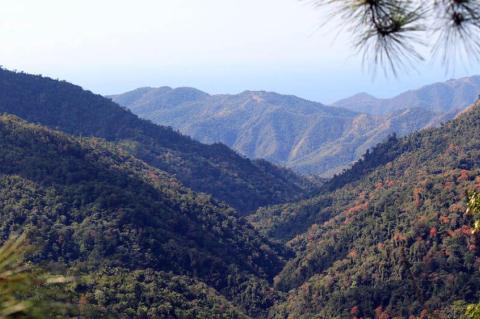
Nestled on the Andes' steep slopes in southern South America, the Andean Patagonian Forest is Earth's southernmost forest. Extending across southern Chile and Argentina along the cordillera, it is one of the few relatively undisturbed temperate forests left on Earth. This narrow strip of greenery covers mountain slopes between the Pacific and the arid Patagonian Desert. However, it faces increasing threats from climate change, invasive species, and habitat fragmentation, endangering a unique ecosystem without an equivalent elsewhere.

The Caribbean Islands Biodiversity Hotspot: A Fragile Paradise Under Threat

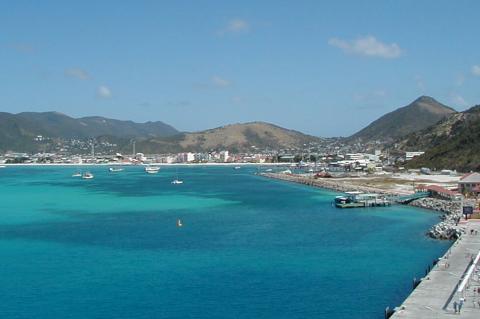
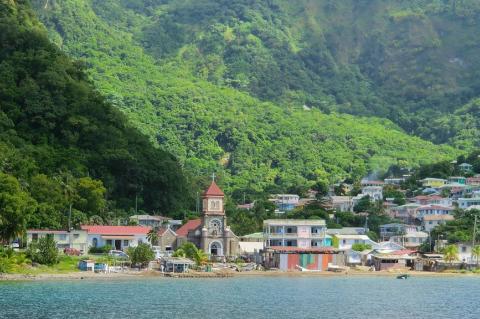
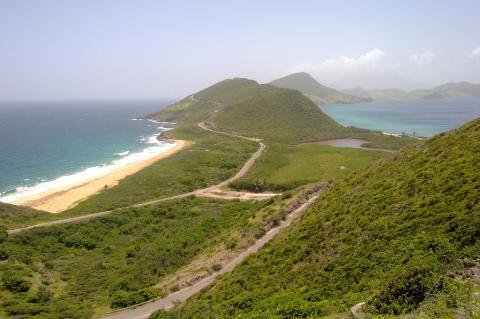
The Caribbean Islands represent one of Earth's most extraordinary concentrations of biodiversity, recognized globally as a critical biodiversity hotspot. This region harbors an exceptional diversity of life found nowhere else. The isolation of these islands over millions of years has created a natural laboratory of evolution, where species have adapted to specific ecological niches in spectacular fashion. Yet this biological treasure faces unprecedented challenges from habitat loss, invasive species, climate change, and human development pressures.

Buenos Aires: The Paris of South America

Buenos Aires, on the Río de la Plata's western shore, is one of South America's most lively and architecturally impressive cities. With about 15 million residents in the metro area, it ranks among the top 20 urban centers globally. Known as the "Paris of South America" for its European-style boulevards, Belle Époque architecture, and vibrant culture, it defies simple labels. From La Boca's colorful conventillos to Recoleta's aristocratic cemetery, Palermo's galleries, and Casa Rosada, the city showcases Argentina's cultural richness and uniqueness— a European city transformed into its own unique place.

ESMA: Where Memory Confronts Terror

In the Núñez neighborhood of Buenos Aires, amid tree-lined streets and residential buildings, stands a complex of white structures that witnessed some of the darkest crimes of the 20th century. The former Escuela Superior de Mecánica de la Armada (ESMA) operated from 1976 to 1983 as Argentina's largest clandestine detention, torture, and extermination center during the brutal military dictatorship that ruled the country. Today, the preserved Officers' Quarters building stands as judicial evidence, a memorial to the disappeared, and a space for reflection on human rights, memory, and the fragility of democracy.

Monte Verde: Rewriting the Story of America's First People

On the banks of Chinchihuapi Creek in southern Chile lies one of the most significant archaeological sites in the Americas. Monte Verde, a Paleolithic settlement preserved beneath a peat bog, fundamentally challenged long-held beliefs about when and how humans first reached the New World. Discovered in 1975, this remarkably well-preserved site revealed evidence of human occupation at the southern tip of South America at least 1,000 years before the previously accepted date for human arrival in the Americas.

South America: Continent of Extremes

From the snow-capped peaks of the Andes to the vast steaming Amazon, from the driest desert on the planet to wetlands the size of France, South America defies easy characterization. This landmass—the world's fourth-largest continent—stretches from the Caribbean shores of Colombia to the windswept channels of Tierra del Fuego, encompassing every climatic zone. Home to nearly 440 million people, South America is a crucible where Indigenous civilizations, European colonization, the African diaspora, and waves of global migration have forged societies as diverse as the landscapes they inhabit.