Landforms of Guatemala

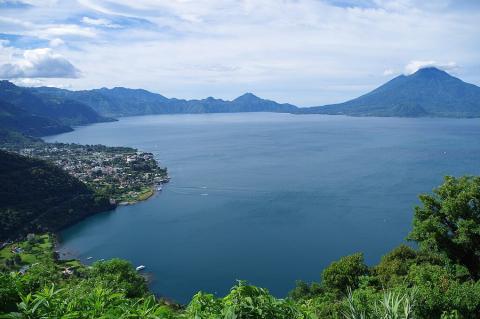
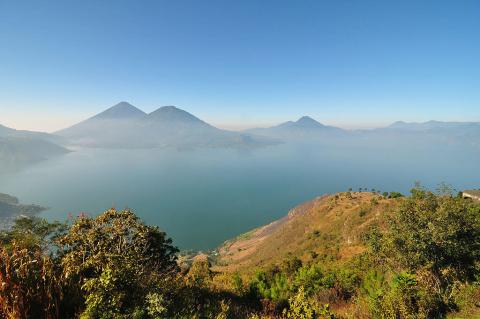
Lake Atitlán and Volcán Atitlán: Guatemala's Volcanic Treasures

Nestled in the Guatemalan Highlands, Lake Atitlán and the towering Volcán Atitlán represent two of Guatemala's most iconic natural landmarks. Lake Atitlán is renowned for its stunning beauty, dramatic volcanic backdrop, and deep cultural heritage, while Volcán Atitlán stands as one of the region's most prominent and active stratovolcanoes. Together, they form a unique landscape that draws tourists and researchers alike, offering a glimpse into Guatemala's rich biodiversity and the enduring legacy of Maya culture.

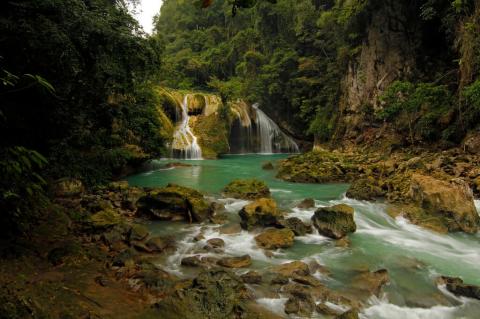
Semuc Champey: Guatemala's Hidden Natural Wonder

Tucked deep within the verdant heart of Guatemala, Semuc Champey stands as one of the country's most breathtaking natural wonders. Famous for its series of turquoise pools and limestone bridge, this secluded paradise attracts adventurers and nature lovers alike. While difficult to reach, those who venture into the jungle are rewarded with awe-inspiring landscapes and a glimpse into the ecological richness of Central America.

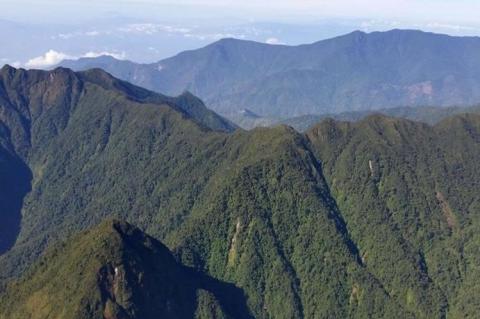
Sierra de las Minas: Guatemala's Ecological Treasure

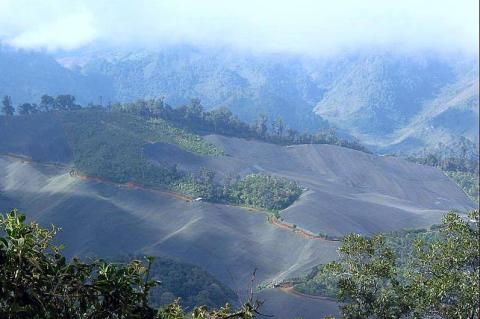
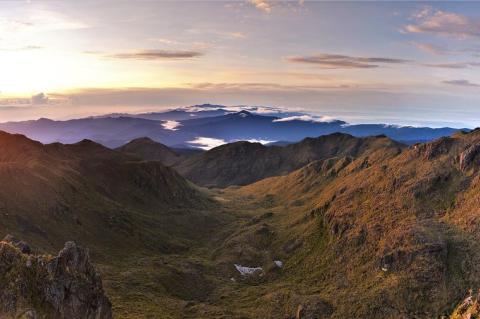
The Sierra de las Minas mountain range and Biosphere Reserve are among Guatemala's most ecologically and geographically significant areas. This range, extending across southeastern Guatemala, is renowned for its rugged terrain, unique ecosystems, and remarkable biodiversity. The region plays a critical role in preserving Guatemala's natural heritage, especially through its designation as a Biosphere Reserve, which safeguards vast expanses of tropical cloud forest and numerous endemic species.

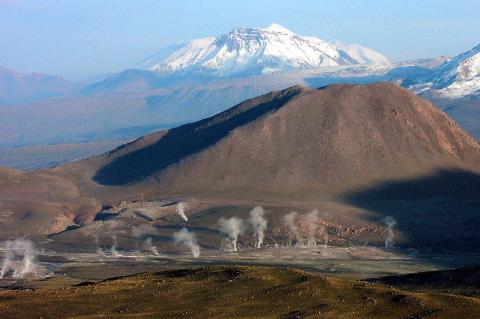
The Andean Volcanic Belt and the Pacific Ring of Fire: Unveiling Earth's Geological Marvels

The Andean Volcanic Belt, along South America's western coast, forms as the Nazca and Antarctic plates subduct beneath the South American Plate. This process generates various volcanic zones, illustrating the intricate interplay of Earth's crustal plates. The belt showcases diverse geological phenomena, from the hazards in the Northern Volcanic Zone to the silicic systems in the Central Volcanic Zone and the glaciated stratovolcanoes in the Austral Volcanic Zone.

The Central America Volcanic Arc: Where Ocean Floor Becomes Mountains

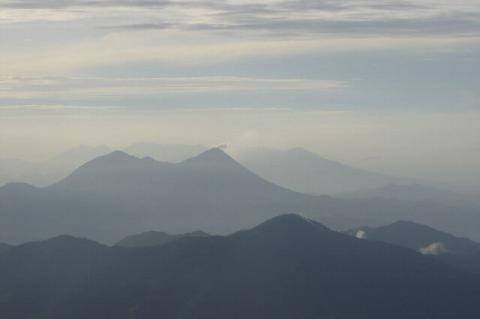
Stretching from Guatemala's volcanic highlands to Panama's Cordillera de Talamanca, the Central America Volcanic Arc represents one of the world's most active and scientifically significant volcanic chains. This geological marvel, also known as the Central Volcanic Range, encompasses more than 70 Holocene volcanoes that have fundamentally shaped the landscape, climate, and human history of Central America. The arc's formation results from the relentless subduction of oceanic crust that transforms seafloor sediments into towering volcanic peaks.

The Guatemalan Highlands: A Geological and Cultural Crossroads

Stretching between the Pacific coastal plains and Guatemala's northern Petén lowlands, the Guatemalan Highlands represent one of Central America's most geologically complex and culturally significant regions. Known locally as "Tierras Altas," this mountainous terrain encompasses towering volcanic peaks, deep valleys, highland lakes, and Indigenous communities. The region's dramatic landscapes are the result of millions of years of tectonic activity, creating a natural laboratory where geological forces have shaped both the environment and civilization.

The Petén Basin and Maya Forest: Where Ancient Civilizations Meet Living Wilderness

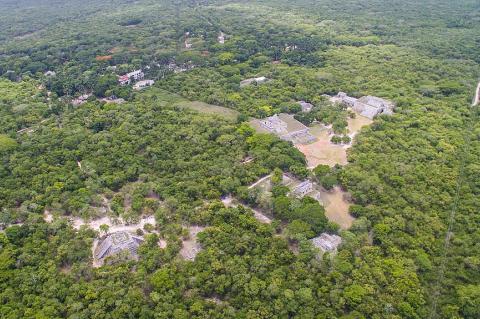
In the verdant heart of Central America, where the borders of Guatemala, Mexico, and Belize converge in a tapestry of emerald green, lies one of the world's most extraordinary convergences of natural wonder and human achievement. Here, beneath canopies that have witnessed the rise and fall of empires, the Petén Basin and its encompassing Maya Forest represent far more than geographical features—they embody a living testament to the intricate dance between civilization and wilderness that has unfolded across millennia.

The Sierra Madre de Chiapas: A Vital Natural Divide

The Sierra Madre de Chiapas is an impressive mountain range that extends parallel to the Pacific coast in southern Mexico and northern Central America. As the southernmost extension of the Sierra Madre Mountain System, this range is a significant geographical and ecological landmark. Spanning multiple countries, the Sierra Madre de Chiapas is known for its diverse ecosystems, volcanic activity, and role in the region's hydrology.

The Yucatán Peninsula: A Living Testament to Time

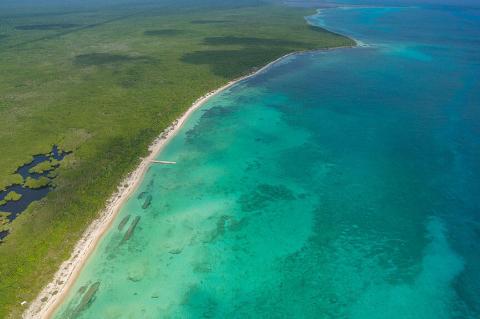
Suspended between the azure waters of the Gulf of Mexico and the Caribbean Sea, the Yucatán Peninsula emerges as one of Earth's most extraordinary geological and cultural theaters. This vast limestone platform extends its ancient arms across three Mexican states—Campeche, Quintana Roo, and Yucatán—while reaching southward into the heart of Belize and Guatemala. Here, in this remarkable convergence of land and sea, the very foundations of the Earth tell stories that span from cosmic catastrophe to human civilization, from primordial forests to sacred cenotes.

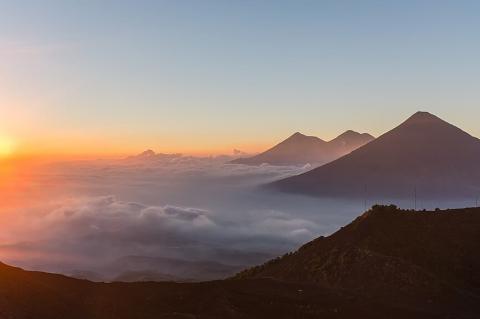
Volcán de Fuego and Acatenango: Guatemala's Dynamic Volcanic Complex

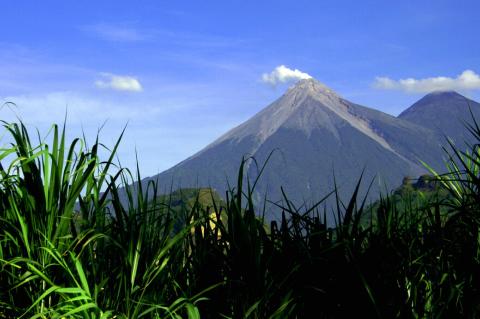
In Guatemala's Central Highlands, two magnificent volcanoes form one of Central America's most scientifically significant volcanic partnerships. Volcán de Fuego and Acatenango represent contrasting stages of volcanic evolution, providing crucial insights into the geological processes that have shaped the region for millennia. While Fuego maintains its status as one of Guatemala's most active volcanoes, dormant Acatenango preserves a record of the complex volcanic history that characterizes this portion of the Central American Volcanic Arc.